
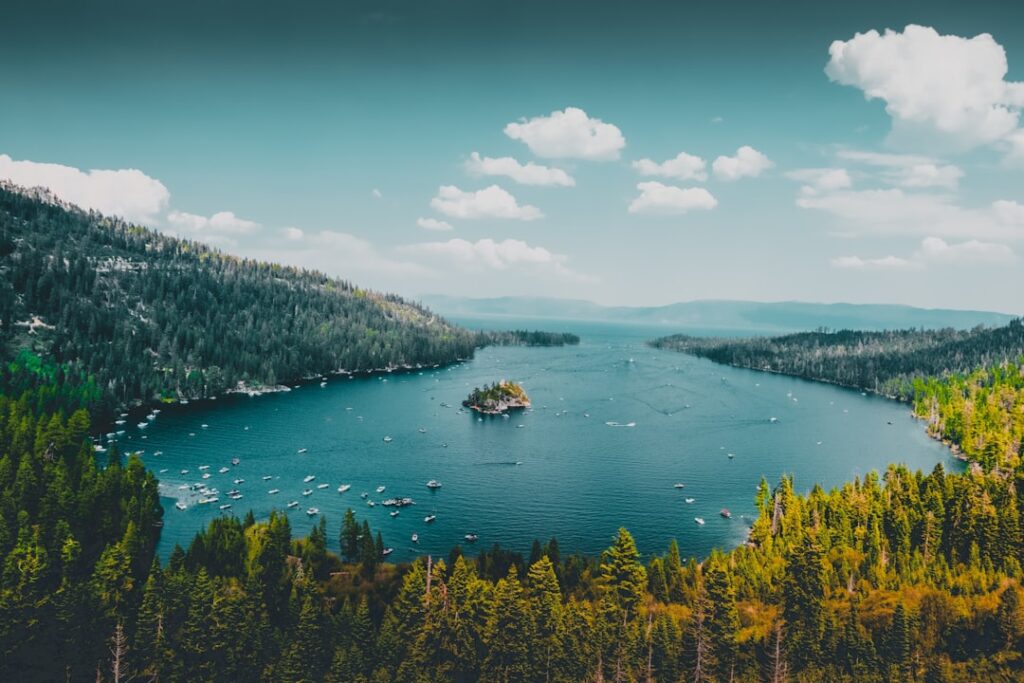
Lake Tahoe sits 6,225 feet above sea level in the Sierra Nevada, straddling the California-Nevada border. This alpine lake — the largest in the Sierra and the second-deepest in the United States — draws visitors year-round for its impossibly clear water, surrounding peaks, and the kind of outdoor recreation that changes with the seasons.
Whether you’re carving through fresh powder in January or paddling across turquoise water in July, Tahoe delivers. Here’s how to make the most of California’s mountain jewel, no matter when you visit.
Summer at the Lake: Beaches and Hiking
From June through September, Lake Tahoe transforms into a high-altitude beach destination. The water stays cold — rarely above 68 degrees — but the scenery more than compensates. Sand Harbor on the Nevada side offers some of the clearest water you’ll find anywhere, with massive granite boulders framing small coves perfect for swimming and snorkeling.
On the California side, Emerald Bay State Park claims the title of Tahoe’s most photographed spot. The small inlet, colored an impossible shade of green-blue, contains Fannette Island, the only island in Lake Tahoe. Park at the Emerald Bay overlook on Highway 89, then hike down the steep one-mile trail to Vikingsholm, a 38-room Scandinavian-style castle built in 1929. The hike back up gains 500 feet, so pace yourself.
For a less crowded beach experience, head to Baldwin Beach near South Lake Tahoe. This three-mile stretch offers plenty of space to spread out, with the dramatic peaks of Desolation Wilderness rising to the west. Pope Beach, just to the north, provides similar uncrowded sand with calmer water ideal for families.
The Tahoe Rim Trail encircles the entire lake basin with 165 miles of single-track trail. You don’t need to tackle the whole thing — the section from Tahoe City to Brockway Summit makes an excellent day hike with lake views and wildflower meadows. Start early to avoid afternoon thunderstorms common in July and August.
Winter: World-Class Skiing Without the Crowds
Tahoe’s ski season typically runs from late November through April, sometimes extending into May at higher elevations. The California side claims several major resorts, each with its own character.
Palisades Tahoe (formerly Squaw Valley) hosted the 1960 Winter Olympics and remains the region’s most challenging mountain. Advanced skiers head straight for KT-22, a double-black-diamond run that drops nearly 2,000 vertical feet. Beginners have plenty of terrain too, with dedicated learning areas and mellow green runs.
Heavenly Mountain Resort straddles the California-Nevada state line above South Lake Tahoe, offering the best lake views of any resort in the basin. On clear days, you can see all the way across Nevada from the 10,067-foot summit. The California side features tree skiing through old-growth forest, while the Nevada side opens up with wide-bowl terrain.
For a quieter, more local experience, try Homewood Mountain Resort on the west shore. Smaller crowds, lower prices, and stunning lake-facing runs make this a favorite among Tahoe regulars. Sugar Bowl, near Donner Summit, receives some of the highest snowfall totals in the region and maintains a classic, unpretentious vibe.
Getting There and Staying Smart
The drive from San Francisco takes roughly four hours via Interstate 80 (to North Shore) or Highway 50 (to South Shore). From Sacramento, you’re looking at two to two-and-a-half hours. Winter driving requires chains or four-wheel drive — California Highway Patrol enforces chain requirements strictly during storms, and you can face hefty fines for being unprepared.
South Lake Tahoe offers the most lodging options and nightlife, with casinos just across the Nevada line. Tahoe City and Truckee on the north shore provide a quieter, more village-like atmosphere with excellent restaurants and easier access to several ski resorts. Book accommodations well in advance for winter weekends and summer holidays — Tahoe’s popularity means last-minute deals are rare.
Summer visitors should arrive early at popular beaches and trailheads. Parking fills up by 9 a.m. on weekends at Sand Harbor and Emerald Bay. Consider staying midweek if your schedule allows, or visit in September when the weather stays warm but crowds thin out considerably.
Beyond the Obvious
Rent a kayak or stand-up paddleboard and explore the shoreline at your own pace. Tahoe City Kayak offers rentals and guided tours that reveal hidden coves and local history. Winter visitors shouldn’t miss snowshoeing around Spooner Lake or cross-country skiing at Royal Gorge, North America’s largest cross-country ski resort with 140 kilometers of groomed trails.
The Tahoe area has adopted strict environmental protections to preserve the lake’s famous clarity. Pack out all trash, use designated restrooms, and stay on marked trails. The lake’s clarity has declined over recent decades, and every visitor plays a role in protecting what makes Tahoe special.
Want more California travel inspiration delivered to your inbox? Subscribe to the Love California newsletter for one short story a day about the Golden State’s most beautiful places and hidden corners.
Tours & experiences in California


Powered by Viator. Some links are affiliate links — we may earn a small commission at no extra cost to you.