
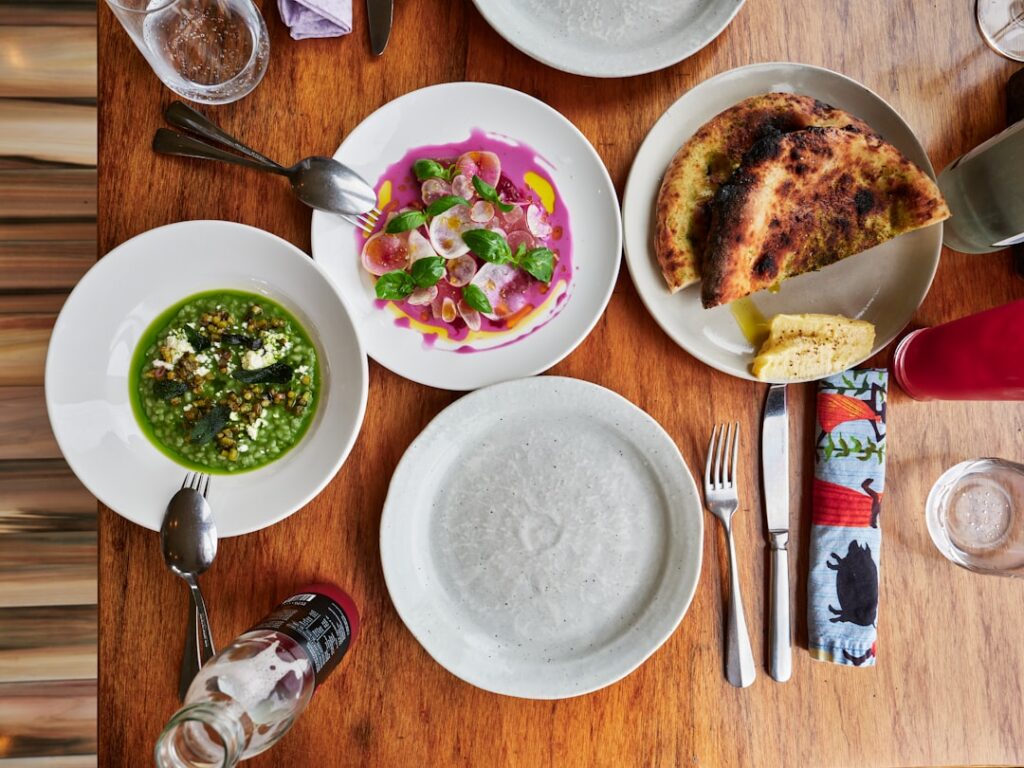
California didn’t just join the farm-to-table movement—it invented it. With year-round growing seasons, thousands of small farms, and chefs who’ve made fresh, local ingredients a culinary religion, this state offers some of the best farm-driven dining in the world. Here’s where to experience it firsthand.
The Bay Area: Where It All Began
Alice Waters opened Chez Panisse in Berkeley in 1971, and nothing was ever the same. Her insistence on seasonal, local ingredients sparked a revolution that’s still shaping how Americans eat. You’ll need a reservation months in advance for the downstairs dining room, but Chez Panisse Café upstairs is more accessible and equally delicious.
In San Francisco, the Ferry Building Marketplace is farm-to-table ground zero. Arrive on Saturday morning for the farmers market, where you’ll find Dirty Girl Produce’s dry-farmed tomatoes, Cowgirl Creamery’s Mt. Tam triple cream, and stone fruit from Frog Hollow Farm. Inside the building, Hog Island Oyster Co. serves bivalves pulled from Tomales Bay that morning, while The Slanted Door does modern Vietnamese with Marin County vegetables.
Don’t miss Zuni Café on Market Street, where the legendary roast chicken for two (with warm bread salad) requires produce from at least four local farms. Order it the moment you sit down—it takes an hour to roast.
Wine Country’s Culinary Temples
Napa and Sonoma have turned farm-to-table into high art. The French Laundry in Yountville grows vegetables in its own garden across the street, and chef Thomas Keller’s tasting menus read like love letters to Napa Valley farmers. If you can’t score a reservation there (or stomach the price), try La Calenda, Keller’s more casual Mexican spot featuring produce from the same gardens.
In Healdsburg, SingleThread Farm-Restaurant-Inn operates an eleven-acre farm and rooftop garden that supplies 75% of what appears on your plate. The Sonoma County wine pairings showcase small producers you’ve never heard of but won’t forget.
For something more low-key, head to Glen Ellen Star, where chef Ari Weiswasser cooks everything over live fire using vegetables from Tierra Vegetables and pork from Stemple Creek Ranch. The wood-oven focaccia alone is worth the drive.
Central Coast Simplicity
Santa Barbara’s farm-to-table scene benefits from perfect weather and some of California’s most productive farmland. The Santa Barbara Public Market downtown houses a collection of food stalls, but the real action happens Wednesday and Saturday mornings at the farmers market, where locals line up for strawberries from McGrath Family Farm and avocados so creamy they taste like butter.
The Lark on the Funk Zone does shared plates built around whatever’s best that day—spot prawns from the harbor, little gems from Tutti Frutti Farms, olive oil from Ojai. Sit at the chef’s counter if you can.
In Paso Robles, Thomas Hill Organics sources from its own farm and others within fifteen miles. The menu changes daily, but the commitment to organic, biodynamic ingredients never wavers. Pair your meal with wine from one of the natural winemakers in the area.
Los Angeles: Size Meets Sophistication
LA’s sprawl makes farm-to-table more challenging, but the city’s chefs have risen to it. At Republique on La Brea, the morning pastries use butter from Straus Family Creamery and the dinner menu features produce from Weiser Family Farms, delivered that morning to the restaurant’s back door.
Gjelina in Venice helped define LA’s casual-chic farm-to-table aesthetic. The vegetable plates—charred brassicas, roasted squash, heirloom tomatoes in summer—often outshine the mains. Go at lunch when it’s easier to get a table.
For the full immersive experience, drive to Ojai and eat at Nocciola, where the chef forages in the surrounding hills and buys from farms you can see from the dining room. The tasting menu is expensive but extraordinary.
Practical Tips for Farm-to-Table Dining
Make reservations well in advance for destination restaurants—some require bookings 30 to 60 days out. Visit farmers markets early for the best selection; most run from 8 or 9 a.m. until noon or 1 p.m. Summer and fall offer peak produce, but California’s year-round growing season means winter citrus, spring strawberries, and fall apples are all spectacular.
Ask servers where ingredients come from—good farm-to-table restaurants are proud to tell you, often by farm name. And remember: the fanciest restaurant isn’t always the best. Some of California’s most honest farm-to-table cooking happens at taco stands using local produce and neighborhood bistros with three-page sourcing lists.
Want more California food stories and travel ideas delivered daily? Subscribe to the Love California newsletter—one short story a day, straight to your inbox.
Tours & experiences in California


Powered by Viator. Some links are affiliate links — we may earn a small commission at no extra cost to you.