
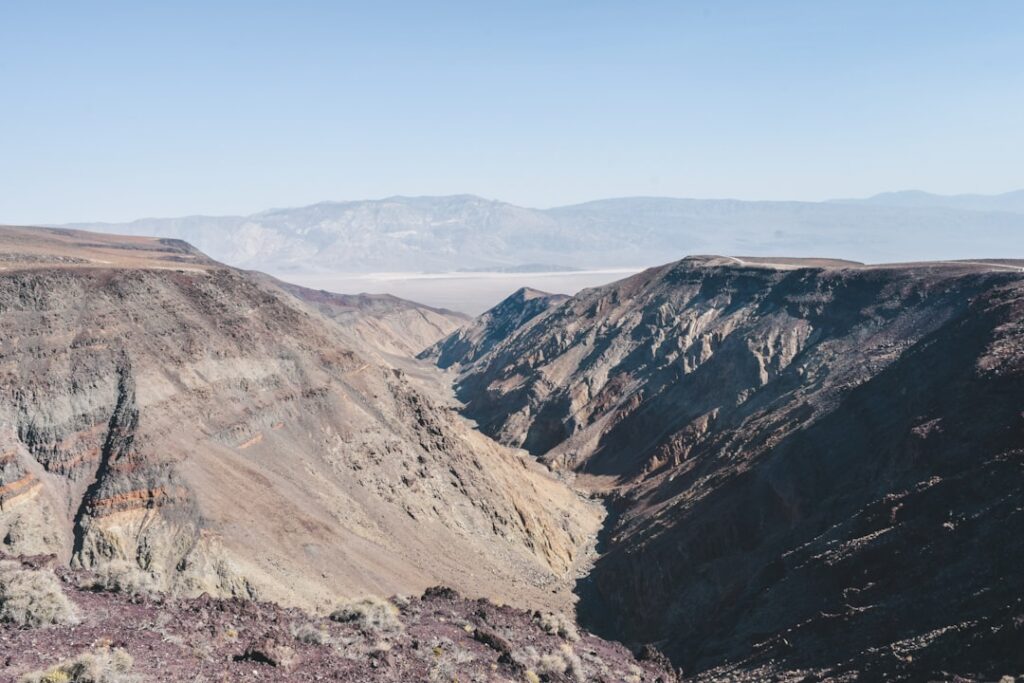
Death Valley holds records that sound impossible: the hottest air temperature ever reliably recorded on Earth (134°F in 1913), the driest place in North America (averaging less than two inches of rain annually), and the lowest point in the Western Hemisphere (Badwater Basin at 282 feet below sea level). But this desert park isn’t just about extremes—it’s a surprisingly diverse landscape of salt flats, sand dunes, volcanic craters, and wildflower-covered valleys that reveal the desert’s unexpected beauty.
Spanning more than 3.4 million acres across the California-Nevada border, Death Valley National Park rewards visitors who come prepared with some of the most otherworldly scenery in the American West.
When to Visit Death Valley
Timing matters more here than almost anywhere else in California. Summer temperatures regularly exceed 120°F, making outdoor activities dangerous and sometimes deadly. The park’s sweet spot runs from late October through April, when daytime temperatures hover between 60°F and 80°F and nights can dip near freezing.
February and March offer the chance to witness a rare desert phenomenon: wildflower blooms. Following wet winters, the valley floor erupts in carpets of desert gold, gravel ghost, and purple phacelia. The park’s website posts bloom updates, but conditions vary dramatically year to year.
Winter brings mild days perfect for hiking, though higher elevations like Telescope Peak can see snow. Spring break and holiday weekends draw crowds to popular spots like Badwater Basin and Zabriskie Point, so arrive early or visit midweek when possible.
Must-See Stops in the Park
Start at the Furnace Creek Visitor Center to orient yourself and check current conditions. From there, head to Zabriskie Point for sunrise, when the badlands glow gold and pink. The eroded mudstone hills create one of the park’s most photographed views, and the short walk from the parking area makes it accessible to everyone.
Drive down to Badwater Basin, where you can walk out onto the vast salt flats. The hexagonal salt polygons crunch underfoot, and looking up at the cliff face, you’ll spot a “sea level” sign nearly 300 feet above you. It’s a surreal reminder of just how low you’re standing.
Artist’s Palette along the one-way Artist’s Drive showcases hills striped with oxidized metals—pink, green, purple, and gold volcanic deposits that look almost painted on. Late afternoon light brings out the colors best.
For a different texture entirely, head to Mesquite Flat Sand Dunes near Stovepipe Wells. These accessible dunes rise up to 100 feet and offer the classic desert experience of walking on windswept sand. Dawn and dusk provide the best light and cooler temperatures.
Dante’s View, perched at 5,475 feet, gives you the park’s grand perspective: you can see Badwater Basin far below and, on clear days, Telescope Peak rising to 11,049 feet—the full vertical relief of Death Valley in one sweeping view.
Hiking and Backcountry Adventures
Death Valley’s hiking ranges from easy boardwalks to serious backcountry treks. The Golden Canyon Trail (three miles round-trip) winds through eroded badlands with options to extend to Red Cathedral or connect to Zabriskie Point.
Mosaic Canyon offers an easy two-mile walk through polished marble walls and narrow passages. The smooth rock, worn by flash floods, creates a natural sculpture gallery.
For more adventure, the hike through Fall Canyon or Titus Canyon takes you deep into the Grapevine Mountains with slot canyons and petroglyphs. Telescope Peak Trail, the park’s highest point, is a strenuous 14-mile round-trip climb rewarded with views stretching from the Sierra Nevada to Charleston Peak in Nevada.
Always carry more water than you think you’ll need—at least one gallon per person per day. Cell service is nearly nonexistent, so download offline maps and tell someone your plans.
Where to Stay and Practical Tips
Inside the park, Furnace Creek offers both The Inn and The Ranch, with lodging, restaurants, and a spring-fed pool. Reservations book months ahead for winter and spring. Stovepipe Wells Village provides simpler accommodations on the valley floor.
Nine campgrounds scatter across the park. Furnace Creek Campground accepts reservations; others operate first-come, first-served. Winter weekends fill quickly, especially at popular spots like Mesquite Spring and Texas Spring.
The closest gateway towns are Beatty, Nevada (about 40 miles from Furnace Creek) and Pahrump, Nevada to the east, or Lone Pine, California, to the west. Each offers additional lodging and services.
Gas up before entering—fuel is available only at Furnace Creek and Stovepipe Wells, and it’s significantly more expensive than outside the park. Bring plenty of food and water; options inside are limited.
Check your vehicle before the drive. Roads are well-maintained but remote, and summer heat can cause tire blowouts and overheating. Carry a spare tire, extra water for the radiator, and a charged phone even though service is spotty.
Death Valley rewards the prepared visitor with landscapes that exist nowhere else on Earth—a desert that’s far more alive and varied than its ominous name suggests.
Want more California stories delivered to your inbox? Subscribe to the Love California newsletter for one short story a day about the Golden State’s best places, flavors, and adventures.
Tours & experiences in California


Powered by Viator. Some links are affiliate links — we may earn a small commission at no extra cost to you.