
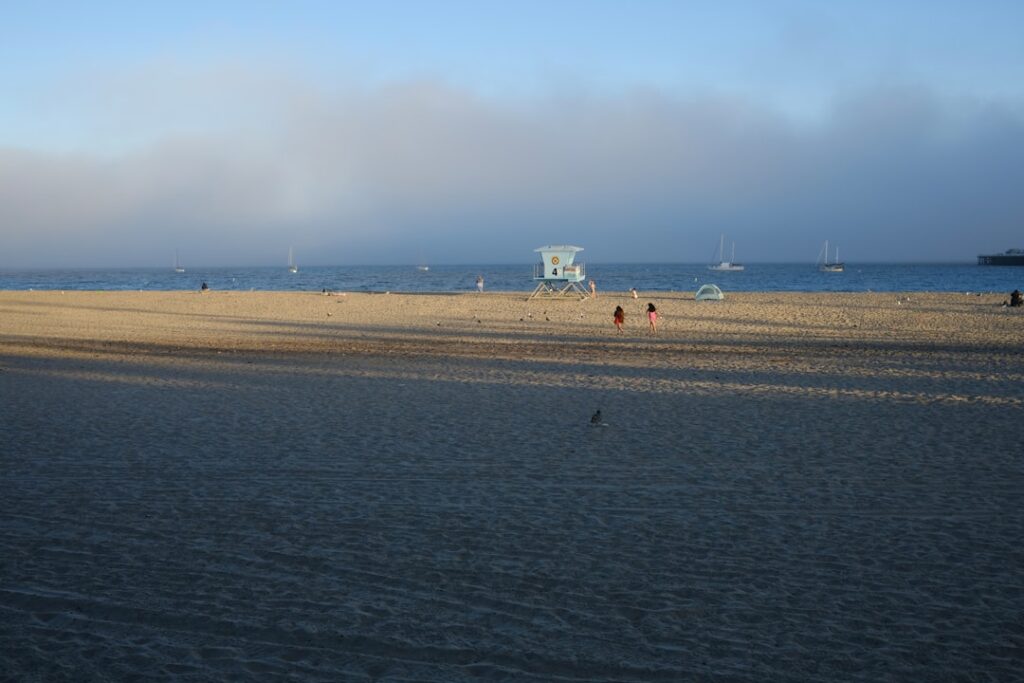
Santa Cruz sits at the northern tip of Monterey Bay, where redwood-covered mountains meet some of California’s most beloved beaches. This compact beach town manages to be both laid-back and lively, with a vintage wooden boardwalk, legendary surf spots, and a downtown packed with independent shops and restaurants. Whether you’re here for the waves, the wine, or just to soak up the California coast, Santa Cruz delivers without the crowds of Southern California.
The Beach Boardwalk and Main Beach
The Santa Cruz Beach Boardwalk is California’s oldest surviving amusement park, and it remains refreshingly free of corporate polish. The Giant Dipper wooden roller coaster has been rattling along since 1924, and the 1911 Looff Carousel still spins with hand-carved horses and a working brass ring game. The boardwalk opens daily in summer and weekends the rest of the year, with free admission—you pay per ride or buy an all-day wristband.
Main Beach, right in front of the boardwalk, is wide and sandy with gentle waves perfect for beginning swimmers and bodyboarders. The water is chilly year-round (mid-50s to low 60s), so most people bring wetsuits or stick to the sand. Parking fills up fast on summer weekends; arrive before 10 a.m. or use the lot at the nearby Santa Cruz Wharf, where you can also grab clam chowder and watch sea lions lounging on the pilings.
Surf Spots That Made History
Santa Cruz claims to be the birthplace of mainland surfing in California, and Steamer Lane remains one of the state’s most iconic breaks. Perched on the cliffs near the lighthouse, this right-hand point break draws expert surfers from around the world. If you’re not ready to paddle out, the viewing platform offers front-row seats to the action, especially during winter swells when waves can reach 15 feet or more.
For learners, head to Cowell’s Beach, just west of the wharf. The mellow, rolling waves and sandy bottom make it ideal for first-timers, and several surf schools operate here with rentals and lessons. Pleasure Point, a few miles east along East Cliff Drive, offers a string of reef breaks that work on different tides and swells—it’s worth the short drive for intermediate surfers looking to level up.
Natural Bridges and West Cliff Drive
West Cliff Drive runs along the coast from the boardwalk to Natural Bridges State Beach, offering two miles of spectacular ocean views. The paved path is perfect for walking, running, or biking, with benches and viewpoints where you can spot dolphins, sea otters, and migrating gray whales from December through April. The Santa Cruz Surfing Museum, housed in a tiny lighthouse at the halfway point, is free and full of vintage boards and local surf history.
Natural Bridges State Beach, at the western end, gets its name from the wave-carved rock arches (though only one remains standing). From October through February, the eucalyptus grove here hosts thousands of overwintering monarch butterflies—one of the largest congregations on the West Coast. The beach itself is great for tide pooling at low tide, when anemones, crabs, and sea stars emerge in the rocky shelves.
Downtown and the Redwoods
Downtown Santa Cruz centers on Pacific Avenue, a pedestrian-friendly stretch filled with bookstores, vintage shops, and cafes. The farmers market runs year-round on Wednesdays downtown and Saturdays on the west side, with excellent produce from nearby Watsonville farms. Don’t miss Verve Coffee Roasters for some of California’s best coffee, or Penny Ice Creamery for small-batch flavors made with local ingredients.
Just minutes from downtown, Henry Cowell Redwoods State Park preserves a grove of old-growth coast redwoods along an easy 0.8-mile loop trail. The tallest trees here reach 285 feet, and the cool, quiet forest offers a dramatic contrast to the sunny beach scene. The San Lorenzo River flows through the park, and a network of longer trails climbs into the Santa Cruz Mountains for those wanting a proper hike.
When to Visit
September and October bring the warmest weather and clearest skies, with fewer summer crowds and water temperatures at their annual peak. Spring is beautiful but often foggy, especially in the mornings. Winter storms create dramatic waves and whale watching opportunities, but expect rain and cold. Summer weekends get packed, particularly around the boardwalk, but the marine layer usually burns off by midday.
Parking can be challenging in peak season. Consider staying within walking or biking distance of the beach, or arrive early and plan to spend the whole day. Street parking near downtown is metered but fairly abundant on weekdays.
Santa Cruz is two hours south of San Francisco via Highway 17, a winding mountain road, or a more scenic three hours down Highway 1. From San Jose, it’s about 45 minutes over the hill. The town makes an excellent base for exploring Monterey Bay, with Capitola, Aptos, and Monterey all within easy reach.
Want more California stories delivered to your inbox? Subscribe to the Love California newsletter for one short story a day about the Golden State’s best beaches, parks, food, and hidden corners.
Tours & experiences in California


Powered by Viator. Some links are affiliate links — we may earn a small commission at no extra cost to you.