
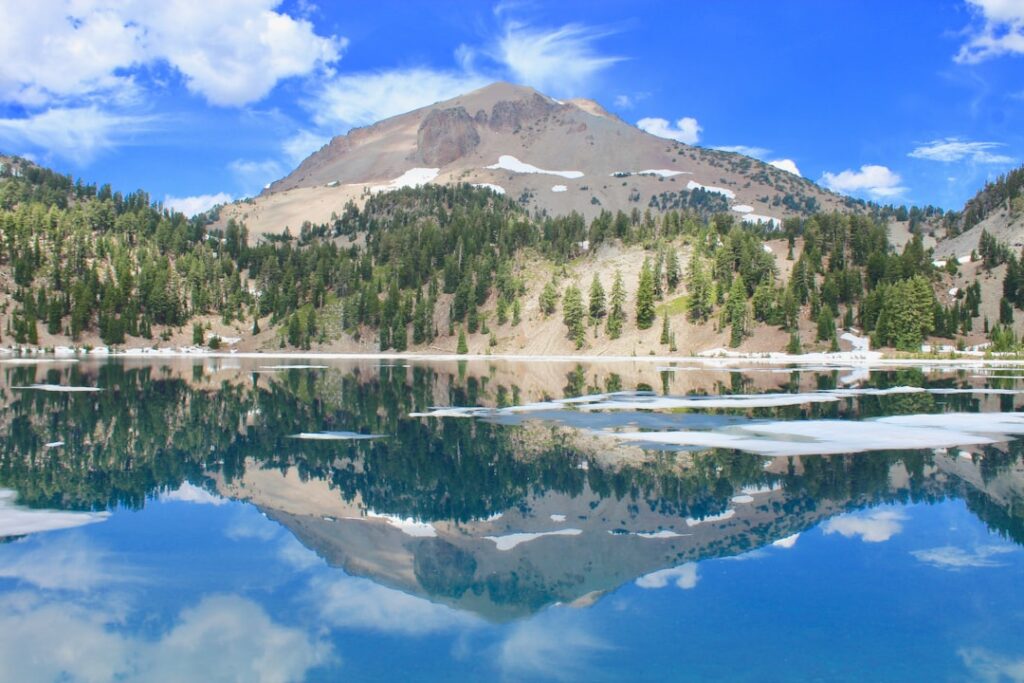
While most California visitors flock to Yosemite or Sequoia, Lassen Volcanic National Park remains one of the state’s best-kept secrets. Located in northeastern California, about three hours north of Sacramento, this 106,000-acre wonderland sits at the crossroads of the Sierra Nevada, the Cascades, and the Great Basin. The result is a landscape unlike anywhere else in the state—steaming fumaroles, turquoise alpine lakes, wildflower-carpeted meadows, and the plug dome volcano that gives the park its name.
What Makes Lassen Different
Lassen Peak last erupted in 1915, making it one of only two volcanoes in the contiguous United States to erupt in the 20th century (the other being Mount St. Helens). That recent geologic activity means the park is very much alive. At Bumpass Hell, the park’s largest hydrothermal area, you can walk boardwalks over boiling springs, hissing steam vents, and mudpots that bubble like witches’ cauldrons. The sulfur smell is intense, but the alien landscape—painted in shades of rust, yellow, and cream—is worth it.
The 3-mile roundtrip trail to Bumpass Hell starts from a parking area along the main park road and is the park’s most popular hike. Go early in the morning during summer to beat the crowds and catch the steam rising in the cooler air. Stay on the boardwalks—the ground is fragile and dangerously hot.
Summit Lassen Peak
The hike to the top of Lassen Peak is a rite of passage for park visitors. This 5-mile roundtrip trail climbs 2,000 feet through a landscape of volcanic rock and twisted whitebark pines. The summit sits at 10,457 feet, and on clear days you can see Mount Shasta to the north and the Sierra Nevada crest to the south.
The trail typically opens in late June or early July, once snowmelt allows access, and stays open through October. Start before 8 a.m. to avoid afternoon thunderstorms, which are common in summer. Bring layers—it can be 80 degrees at the trailhead and 50 degrees at the summit. The air is thin up there, so pace yourself and bring plenty of water.
Hidden Lakes and Quiet Corners
Beyond the main attractions, Lassen rewards those who venture deeper. Manzanita Lake, near the northwest entrance, offers easy paddling and stunning reflections of Lassen Peak on calm mornings. Rent a kayak or bring your own and explore the shoreline, watching for osprey and bald eagles.
For a longer adventure, hike to Cinder Cone, a near-perfect volcanic cone you can climb for 360-degree views of the Painted Dunes and Fantastic Lava Beds. The 4-mile roundtrip hike is deceptively tough—the final push up the loose cinder slope feels like climbing sand—but the views from the rim are extraordinary.
Kings Creek Falls, a 3-mile roundtrip hike from the main park road, drops 40 feet into a lush canyon—a cool respite on hot summer days. The trail descends through meadows filled with lupine and Indian paintbrush in July, then drops steeply to the falls. Remember, what goes down must come back up.
When to Visit and Where to Stay
Lassen’s main park road typically opens in late June and closes with the first heavy snows in October or November. July and August offer the best weather and full trail access, but they’re also the busiest months. September is ideal—warm days, cool nights, fewer visitors, and the aspen turning gold.
The park has eight campgrounds, with Manzanita Lake and Summit Lake being the most popular. Both take reservations through recreation.gov starting in April. The Manzanita Lake Camper Store rents kayaks and sells firewood and basic supplies.
Outside the park, the town of Mineral offers a general store and the casual Lassen Mineral Lodge. Chester, 30 minutes east, has more dining options and grocery stores. Red Bluff, an hour west, is the closest larger town with full services.
Winter transforms Lassen into a snow-covered playground. The park road closes, but the southwest entrance stays open for snowshoeing and cross-country skiing. Rangers lead free snowshoe walks on winter weekends.
Lassen Volcanic National Park proves that California’s volcanic past is far from over—and that some of the state’s most spectacular landscapes lie well off the beaten path. Want more hidden corners of California delivered to your inbox? Subscribe to the Love California newsletter and get one short story a day.
Tours & experiences in California


Powered by Viator. Some links are affiliate links — we may earn a small commission at no extra cost to you.