
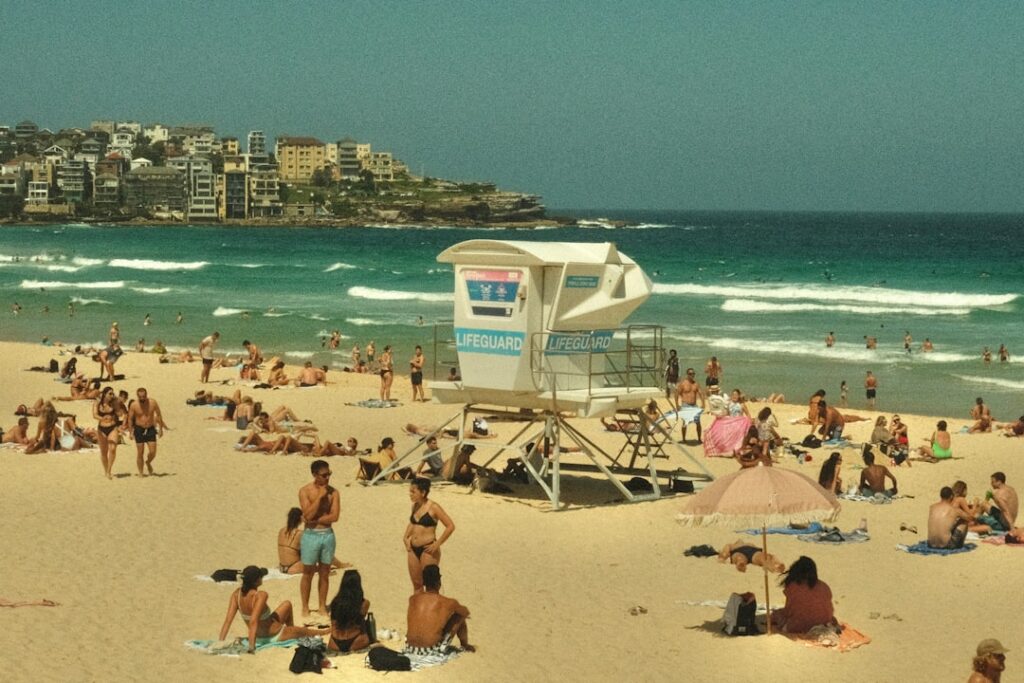
La Jolla isn’t just one beach—it’s a string of distinct coves, each with its own personality and purpose. Some are calm enough for toddlers to wade. Others demand respect from even experienced ocean swimmers. What they share is crystalline water, dramatic sandstone formations, and some of Southern California’s best opportunities to get close to marine life without a boat.
Here’s how to choose the right stretch of sand for what you want to do, along with the insider details that make each one work.
La Jolla Cove: Snorkeling and Sea Lions
La Jolla Cove is the postcard shot—a small, protected beach flanked by cliffs and filled with impossibly clear water. It’s part of the San Diego-La Jolla Underwater Park Ecological Reserve, which means no fishing and healthy populations of bright orange garibaldi, schools of leopard sharks in summer, and the occasional ray gliding over the sand.
The cove is best for snorkeling from July through September when the water is warmest and visibility reaches 20 to 30 feet. Rent gear from the shops on Prospect Street or bring your own. Enter from the small beach, swim out toward the buoys, and stay within the protected area. The rocks to the left are where you’ll find the most fish.
Just above the cove, along the seawall at Coast Boulevard, the sea lions have claimed their territory. They’re loud, they smell, and they’re one of the best free wildlife encounters in California. Come in the morning for smaller crowds and better light for photos.
La Jolla Shores: The Family Beach
A mile north, La Jolla Shores is the opposite of the Cove—a wide, gently sloping beach that runs for nearly a mile. This is where you bring young kids, beach chairs, and a cooler for the day. The waves are manageable, lifeguards are on duty year-round, and there’s plenty of room to spread out even on summer weekends.
The grassy Kellogg Park behind the beach has picnic tables, restrooms, and showers. Parking fills early on weekends—arrive before 9 a.m. or be prepared to circle. Street parking along Camino del Oro is free but competitive.
If you’re a kayaker, this is your launch point. Paddle north toward the sea caves at Clam’s Cave or south to the Cove. Several outfitters rent kayaks and stand-up paddleboards right on the beach.
Windansea Beach: For Surfers and Sunset Seekers
South of the village, Windansea is La Jolla’s iconic surf break, immortalized in Tom Wolfe’s “The Pump House Gang.” The beach is small and rocky, the surf is serious, and the vibe is distinctly local. This isn’t a beginner break—the reef bottom and powerful waves demand experience.
But you don’t have to surf to appreciate Windansea. The rock formations, especially the palm-thatched surf shack perched on the reef, make this one of the most photogenic spots in San Diego. Come at low tide to explore the tide pools, or at sunset when the westward view is unobstructed and golden.
Parking is limited to the residential streets of Neptune Place. Be respectful—this is a neighborhood, and locals are protective of their break.
Children’s Pool: The Seal Rookery
Technically called Casa Beach, everyone knows it as Children’s Pool, though the “children” these days are harbor seals. A concrete breakwater built in 1931 created a calm basin perfect for kids—until the seals moved in and made it their pupping ground.
Now it’s one of the best places in California to see harbor seals up close, especially from December through May when mothers give birth and nurse their pups. A rope barrier keeps people at a distance, but you’ll still get excellent views from the seawall and the beach itself (when the seals are hauled out on the sand, not in the water).
Visit at low tide for the best seal-watching. Bring binoculars if you have them, but even without them you’ll be close enough to see whiskers. Never cross the rope or approach the seals—mothers will abandon pups if stressed, and the bulls can be aggressive.
Practical Tips for Beach-Hopping La Jolla
Parking is the biggest challenge. Meters along Coast Boulevard accept credit cards and run $2 per hour with a two-hour limit. The lot at La Jolla Shores fills by 10 a.m. on weekends. Your best strategy: arrive early, or visit on a weekday.
Water temperatures range from the low 60s in summer to the mid-50s in winter. Most locals wear wetsuits year-round for anything more than a quick dip. If you’re snorkeling, a 3mm wetsuit makes a huge difference in how long you can stay in.
Each beach has its own microclimate. The Cove and Children’s Pool can be socked in with fog while La Jolla Shores is sunny. Check the surf report and webcams before you go.
Want more stories like this in your inbox? Subscribe to the Love California newsletter—one short story a day, all the best of the Golden State.
Tours & experiences in California


Powered by Viator. Some links are affiliate links — we may earn a small commission at no extra cost to you.