
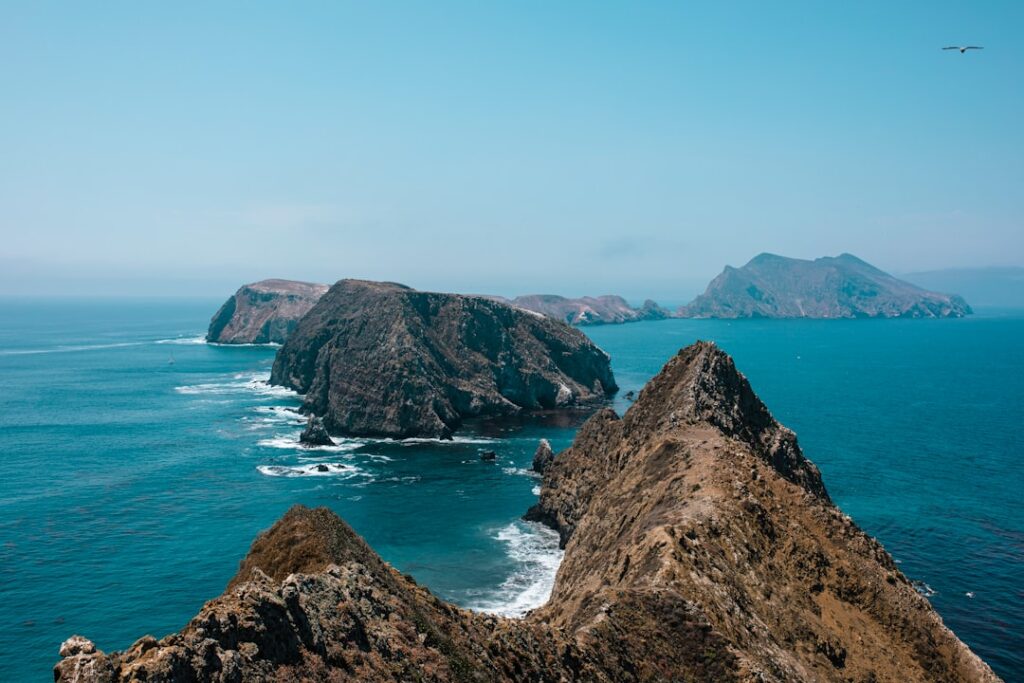

Twenty-five miles off the coast of Ventura lies one of California’s most extraordinary and least-visited national parks. Channel Islands National Park protects five remote islands where you can kayak through sea caves, hike coastal bluffs carpeted with wildflowers, and spot wildlife found nowhere else on earth. It’s wild, windswept, and completely worth the boat ride to get there.
With no lodging, restaurants, or visitor services on the islands themselves, visiting Channel Islands requires more planning than driving to Yosemite or Joshua Tree. But the reward is a California landscape few people experience: rugged, pristine, and utterly spectacular.
Which Island Should You Visit?
Each of the five islands has its own character. Anacapa, the closest to the mainland at just an hour’s boat ride from Ventura Harbor, is perfect for first-timers. The small island features a dramatic lighthouse, excellent tide pools, and accessible hiking. In spring, the clifftops turn brilliant yellow with giant coreopsis blooms.
Santa Cruz Island, the largest, offers the most diversity. You can explore Painted Cave, one of the world’s largest sea caves, by kayak or boat tour. Scorpion Anchorage provides easy access to coastal hikes and snorkeling in kelp forests teeming with bright orange garibaldi fish. The island’s interior holds rare Torrey pines and sweeping views across multiple islands.
Santa Rosa Island appeals to backpackers and those seeking solitude. It’s home to the rare island fox, Torrey pines, and windswept beaches that feel like the edge of the world. San Miguel, the most remote and often fogbound, hosts enormous rookeries of seals and sea lions—thousands of them barking on the beaches during pupping season.
Santa Barbara Island, the smallest, is a favorite with snorkelers and divers. The waters around it rank among California’s best for underwater visibility.
Getting There and What to Bring
Island Packers, the park’s authorized concessionaire, operates boats year-round from Ventura Harbor. Crossings to Anacapa take about an hour; Santa Cruz is 90 minutes; Santa Rosa around three hours. Boats depart early—usually between 8 and 10 a.m.—and return in the afternoon. Expect to pay around $60 to $80 per adult for a day trip, depending on the island.
The Pacific can be rough. If you’re prone to seasickness, take medication before boarding. The crossing isn’t always smooth, but spotting dolphins, sea lions, and even whales along the way makes it memorable.
Pack everything you need for the day: water (at least two liters per person), food, sunscreen, layers for wind and sun, and sturdy hiking shoes. There are no services, shops, or freshwater sources on the islands. Whatever you bring in, you must pack out.
Best Times to Visit
Each season offers something different. Spring (March through May) brings wildflower blooms, especially on Anacapa and Santa Cruz. The giant coreopsis, which looks like a cross between a sunflower and a tree, creates stunning golden landscapes.
Summer offers the calmest seas and warmest weather, making it ideal for kayaking, snorkeling, and camping. This is peak season, so book boat tickets well in advance.
Fall (September through November) features excellent wildlife watching. Elephant seals begin arriving at San Miguel, and migrating whales pass offshore. The summer crowds thin out, but conditions remain good for day trips.
Winter is for the adventurous. Seas can be rough and boat trips less frequent, but you’ll have the islands almost to yourself. Gray whales migrate past in huge numbers from December through March.
Kayaking, Snorkeling, and Camping
Sea kayaking around the islands ranks among California’s best paddling experiences. Santa Cruz Island’s Scorpion Anchorage is the most accessible launch point, with calm waters and sea caves to explore. Outfitters in Ventura offer guided trips that include kayak transport on the boat.
Snorkeling and diving reveal forests of giant kelp swaying in the current, with lobsters, octopus, and fish darting through the fronds. Bring your own gear or rent from shops in Ventura before boarding.
Camping is available on Anacapa, Santa Cruz, Santa Rosa, and San Miguel, but it’s primitive—pit toilets, no water, no shade. You’ll need to carry everything from the boat landing, sometimes uphill. But waking up to an island sunrise with seabirds wheeling overhead and sea lions barking below is unforgettable. Reserve campsites through recreation.gov months ahead for summer weekends.
Channel Islands National Park rewards those willing to make the effort. It’s California at its wildest and most beautiful—no roads, no crowds, just wind, waves, and endless blue horizons.
Want more California travel stories like this delivered to your inbox? Subscribe to the Love California newsletter—one short story a day, exploring the Golden State beyond the brochures.
Tours & experiences in California


Powered by Viator. Some links are affiliate links — we may earn a small commission at no extra cost to you.