
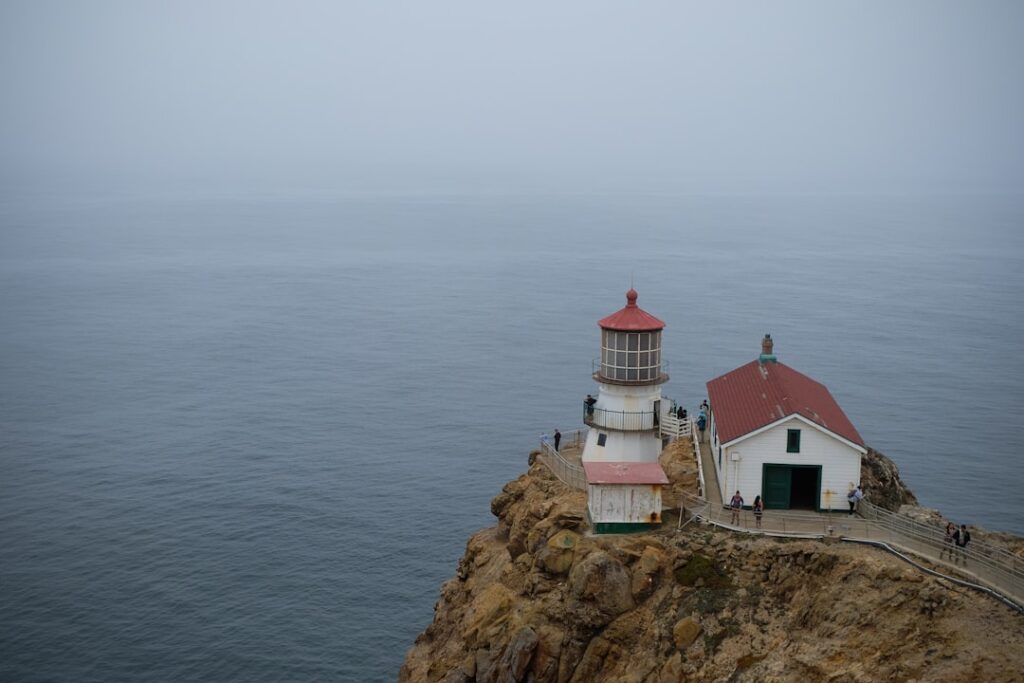

Point Reyes National Seashore sits on a windswept peninsula that juts into the Pacific like California’s outstretched arm. Just beyond the Golden Gate, this 71,000-acre preserve feels a world away from San Francisco’s bustle—a place where tule elk wander through coastal prairie, elephant seals haul out on remote beaches, and lighthouse keepers once tended beacons through fog so thick you couldn’t see your hand in front of your face.
The peninsula itself is geologically remarkable. It sits on the Pacific Plate, while the rest of Marin County rests on the North American Plate. The San Andreas Fault runs right through the park, and during the 1906 earthquake, Point Reyes lurched 20 feet northward in an instant. You can see the evidence along the Earthquake Trail near Bear Valley.
Getting There and Getting Around
Point Reyes is about an hour’s drive north from San Francisco via Highway 1 or Sir Francis Drake Boulevard. The park has no entrance fee, but parking fills up fast on weekends, especially at popular trailheads like Bear Valley and Chimney Rock. Arrive before 10 a.m. or plan to visit on weekdays. The park operates a weekend shuttle during peak season to popular destinations like Drakes Beach and the lighthouse.
Stop first at the Bear Valley Visitor Center to grab maps and check conditions. Cell service is spotty throughout the park, so download maps ahead of time. The roads are narrow and winding—Sir Francis Drake Boulevard stretches 20 miles from park headquarters to the lighthouse, so budget time accordingly.
The Lighthouse and Whale Watching
The historic Point Reyes Lighthouse perches 300 feet above the surf on the windiest point in the park. To reach it, you’ll descend 308 steps down the cliff face—a knee-testing climb back up, but worth every step. From December through April, this is one of the best spots on the entire California coast to watch gray whales migrate south to Baja and back north to Alaska. Bring binoculars and a windbreaker. The wind here regularly tops 40 mph.
The lighthouse is open Thursday through Monday, but the overlook platforms are accessible daily. On winter weekends, rangers lead whale-watching talks. If you spot a spout, watch patiently—gray whales surface three to five times before diving for longer periods.
Beaches and Elephant Seals
Point Reyes claims some of the most beautiful and least-crowded beaches in the Bay Area. Drakes Beach, sheltered within Drakes Bay, offers calmer waters and a lovely arc of white sand. The Beach Café here serves surprisingly good oysters and clam chowder.
North and South Beach stretch for miles along the Pacific side—dramatic, windswept, and typically empty. The water is cold and the currents dangerous, so these are beaches for walking, not swimming. Limantour Beach, accessed via Limantour Road, is more protected and popular with families.
The real show happens at Chimney Rock from late December through March, when hundreds of elephant seals gather to breed and give birth. Bulls weighing up to 5,000 pounds battle for dominance while cows nurse pups born just days earlier. Stay on the designated trails and keep at least 300 feet away—these animals are wild and surprisingly fast when provoked. The 1.8-mile Chimney Rock Trail also offers spectacular wildflower displays in April.
Hiking and Wildlife
Point Reyes offers more than 150 miles of trails, from easy strolls to all-day treks. The Bear Valley Trail is the park’s most popular, running 4.1 miles one-way to the coast through a lush forest of Douglas fir and bay laurel. The trail ends at Arch Rock, where waves crash through a natural sea arch.
For a longer adventure, the 10-mile Coast Trail from Palomarin to Alamere Falls passes several lakes before reaching a rare waterfall that drops directly onto the beach. The trail is moderate but long—start early and bring plenty of water.
Tomales Point Trail, a 9.5-mile out-and-back, takes you through the Tule Elk Reserve where you’ll almost certainly see the park’s protected elk herd. The trail ends at the peninsula’s northernmost tip with views across to Bodega Bay. Spring brings wildflowers; summer brings fog that rolls in most afternoons.
Practical Tips
Weather at Point Reyes is famously unpredictable. Summer often means fog and wind, while fall and spring can be surprisingly clear and warm. Layer your clothing and always bring a jacket, even on sunny days. Winter is storm season but also the best time for whale watching and dramatic wave action.
There’s no food available in the park except at the Drakes Beach Café (open weekends and holidays). Pack a picnic or stop in Point Reyes Station, a charming small town with excellent restaurants, bakeries, and the famous Cowgirl Creamery. The town sits just outside the park and makes a perfect lunch or dinner stop.
Camping is available at four hike-in campgrounds—reserve well ahead through Recreation.gov. The closest towns with lodging are Olema, Point Reyes Station, and Inverness.
Point Reyes rewards return visits. Each season brings different wildlife, wildflowers, and weather. It’s the kind of place that gets under your skin—wild California coast at its absolute finest.
Want more California travel inspiration delivered daily? Subscribe to the Love California newsletter and get one short story a day about the Golden State’s hidden corners and well-loved favorites.
Tours & experiences in California


Powered by Viator. Some links are affiliate links — we may earn a small commission at no extra cost to you.