
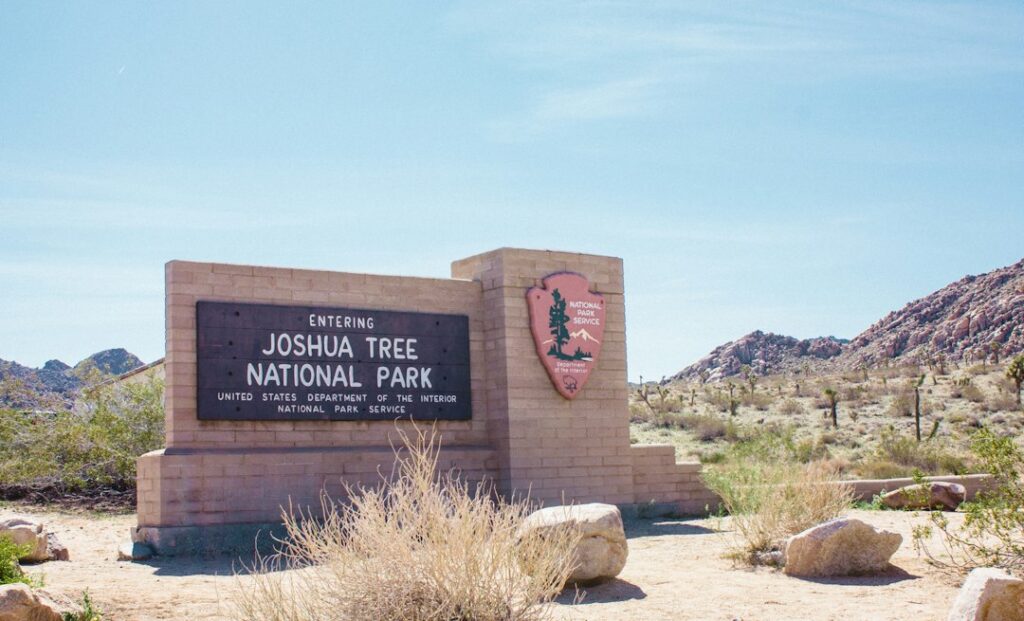
Joshua Tree National Park sits where the Mojave and Colorado deserts meet, creating a landscape unlike anywhere else in California. The park’s namesake trees—those twisted, spiky silhouettes—are just the beginning. You’ll find massive granite boulders perfect for climbing, fields of jumping cholla that glow in afternoon light, and some of the darkest skies in Southern California.
The park covers nearly 800,000 acres, but most visitors stick to a handful of must-see spots along the main park roads. Come prepared: there are no food services inside the park, cell service is spotty at best, and summer temperatures regularly exceed 100 degrees.
Best Time to Visit
October through April is prime time at Joshua Tree. Daytime temperatures hover in the 70s and 80s, perfect for hiking and scrambling over rocks. Winter nights drop below freezing, so pack layers. Spring—especially March and April—brings wildflower blooms if winter rains have been generous. Yellow brittlebush, purple desert lupine, and white desert lilies carpet the valleys.
Avoid summer unless you’re an early riser willing to hit the trails by 6 a.m. July and August see temperatures well above 100 degrees, and the rock formations become too hot to touch by midday.
Weekends from November through March get crowded, especially around popular sites like Skull Rock and Hidden Valley. Arrive before 9 a.m. or after 3 p.m. to snag parking. Weekdays are noticeably quieter.
What to See and Do
Start at the Cholla Cactus Garden, about 20 miles north of the Cottonwood Visitor Center. A quarter-mile loop trail takes you through a dense forest of teddy bear cholla. The backlit cacti glow gold in late afternoon—bring your camera. Just don’t get too close; those fuzzy-looking spines detach at the slightest touch.
Skull Rock is exactly what it sounds like: a boulder formation that looks like a giant skull. The 1.7-mile loop trail here weaves through massive rock piles and passes several other striking formations. It’s one of the park’s most accessible hikes and great for families.
For a longer adventure, the Ryan Mountain Trail climbs 1,000 feet over 1.5 miles to panoramic views of Lost Horse Valley, Queen Valley, and the San Jacinto Mountains. The trail is steep and exposed—start early and bring plenty of water.
Keys View, at 5,185 feet, offers the park’s best overlook. On clear days, you can see the Salton Sea and into Mexico. The short paved path from the parking area makes this accessible for everyone.
Rock climbers come from around the world to tackle Joshua Tree’s granite formations. Hidden Valley is the most popular area, with routes for all skill levels. Even if you don’t climb, the one-mile loop trail through Hidden Valley is worth the walk.
Practical Tips
Enter through the north (Twentynine Palms) or west (Joshua Tree) entrances for quickest access to major sites. The south entrance at Cottonwood is more remote but less crowded.
Fill up your gas tank before entering—the nearest stations are in Twentynine Palms, Yucca Valley, or Joshua Tree town. Bring all the food and water you’ll need. Figure at least one gallon of water per person for a day of hiking.
The park requires a $30-per-vehicle entrance fee, good for seven days. An America the Beautiful annual pass ($80) covers entrance to all national parks and is worth it if you’re visiting multiple parks in California.
Camping at Joshua Tree is first-come, first-served at most campgrounds, except Jumbo Rocks and Black Rock Canyon, which take reservations through recreation.gov. Sites fill up fast on weekends. Backcountry camping is allowed with a free permit—register at any of the visitor centers.
Cell service doesn’t exist in most of the park. Download offline maps before you arrive. The park’s official app includes trail maps and information that work without connectivity.
Nearby Towns
The town of Joshua Tree, just outside the west entrance, has grown into a quirky desert outpost with coffee shops, taco stands, and art galleries. Coyote Corner serves excellent breakfast burritos. Stop at the Joshua Tree Saloon for a beer after a long day of hiking.
Twentynine Palms, at the north entrance, offers more services including grocery stores and gas stations. The Palms Restaurant on Adobe Road has been serving straightforward American food since 1946.
The drive from Los Angeles takes about two and a half hours; from San Diego, count on three. Palm Springs is only 45 minutes from the west entrance, making Joshua Tree an easy day trip from the desert resort town.
Ready to plan your California adventure? Subscribe to the Love California newsletter for one short story a day—insider tips, road trip ideas, and the best of what’s happening across the state.
Tours & experiences in California


Powered by Viator. Some links are affiliate links — we may earn a small commission at no extra cost to you.