
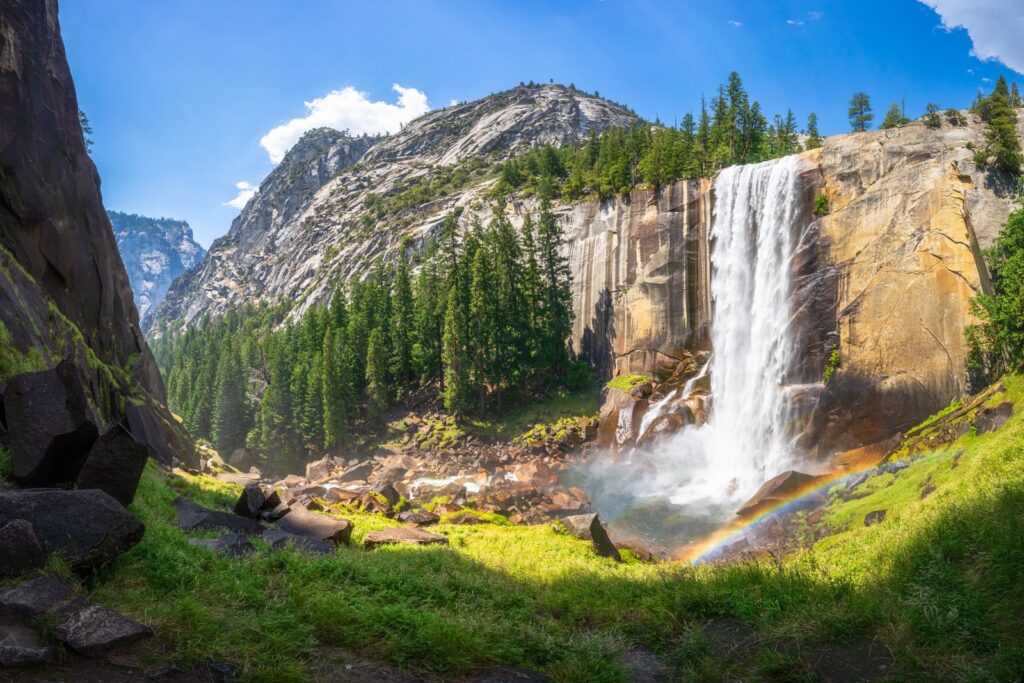
November marks the sweet spot in Yosemite Valley. The summer crowds have thinned, the air is crisp, and the black oaks and maples turn shades of gold and amber against the granite walls. You’ll find shorter lines at trailheads, easier parking, and a quieter experience on the valley floor.
This is when locals visit. The park stays open year round, but fall offers ideal hiking temperatures and clear skies before winter storms arrive. Waterfalls run lower than spring, but the trade-off is solitude and stunning autumn color.
Where to Hike
The Mist Trail to Vernal Fall remains one of the valley’s best hikes in fall. The 5.4-mile round trip gains about 1,000 feet, and while the waterfall flows at a fraction of its spring volume, you’ll have the granite steps mostly to yourself. Wear layers—mornings start cold, but you’ll warm up quickly on the climb.
For a longer day, continue to Nevada Fall for a 5.9-mile loop via the John Muir Trail. The panoramic views from the top justify the additional elevation gain, and the golden cottonwoods along the Merced River on the return are worth the effort.
Mirror Lake Loop offers an easier 5-mile walk with minimal elevation change. The lake itself is often just a meadow by fall, but the reflections of Half Dome in remaining pools and the changing foliage make it a peaceful alternative to steeper trails.
Valley Floor and Meadows
Cook’s Meadow and Sentinel Meadow turn golden in autumn. Both are accessible via flat, easy trails perfect for early morning or late afternoon walks. Deer graze openly, and the light on El Capitan and Half Dome shifts from orange to pink as the sun sets.
Ahwahnee Meadow, directly in front of the Majestic Yosemite Hotel, provides classic views of Glacier Point and the valley’s south wall. The meadow loop is less than a mile and offers some of the best fall color in the park.
Bring binoculars if you’re interested in wildlife. Black bears are active in fall, feeding heavily before winter. Coyotes, mule deer, and a variety of birds are easier to spot now than in summer.
Practical Details
You no longer need a reservation to enter Yosemite in fall. The park entrance fee is $35 per vehicle, valid for seven days. If you’re visiting multiple national parks, the America the Beautiful Annual Pass at $80 covers entrance to all of them for a year.
Parking fills up by midday on weekends, even in fall. Arrive before 9 a.m. or use the free valley shuttle, which runs year-round and stops at all major trailheads, lodges, and viewpoints. The shuttle eliminates the parking headache entirely.
Temperatures in the valley range from the low 30s at sunrise to the mid-60s by afternoon. Pack layers, including a warm jacket for early starts and evenings. Trails can be icy in shaded areas—traction devices or microspikes are smart to carry, especially on stone steps.
Where to Stay and Eat
Yosemite Valley Lodge and the Majestic Yosemite Hotel both remain open through fall. Book well ahead—rooms go fast even outside peak season. Half Dome Village offers heated tent cabins at a lower price point, though some close for the season in late autumn.
Outside the park, El Portal, Midpines, and Mariposa offer more lodging options within an hour’s drive of the valley. Groveland to the north is another solid choice, especially if you’re entering via Highway 120.
The Village Store stocks groceries and supplies. Degnan’s Kitchen serves pizza and sandwiches, while the Mountain Room Restaurant at Yosemite Valley Lodge offers sit-down meals with views of Yosemite Falls. Reservations are recommended for dinner.
Fall in Yosemite Valley rewards those willing to trade the drama of peak waterfall season for space, color, and quiet. The cliffs don’t shrink, the trails don’t disappear, and the granite glows just as warm in October and November as it does in May.
Want more California stories like this? Subscribe to the Love California newsletter and get one short story a day, delivered straight to your inbox.
Tours & experiences in California


Powered by Viator. Some links are affiliate links — we may earn a small commission at no extra cost to you.