
Lassen Volcanic National Park sits in the southern reaches of the Cascade Range, where all four types of volcanoes exist within a single park. At 10,457 feet, Lassen Peak last erupted in 1915, and the landscape still hisses, bubbles, and steams with geothermal activity. This is California at its most volatile and least visited—which means you’ll often have trails and thermal areas largely to yourself.
The park’s main road, Highway 89, climbs through dense forests before breaking into alpine terrain near the summit. Most visitors arrive between late June and October, when snow clears from the higher elevations. Outside these months, the main park road closes, though the northwest and southwest entrances remain accessible for snowshoeing and cross-country skiing.
Bumpass Hell and Hydrothermal Wonders
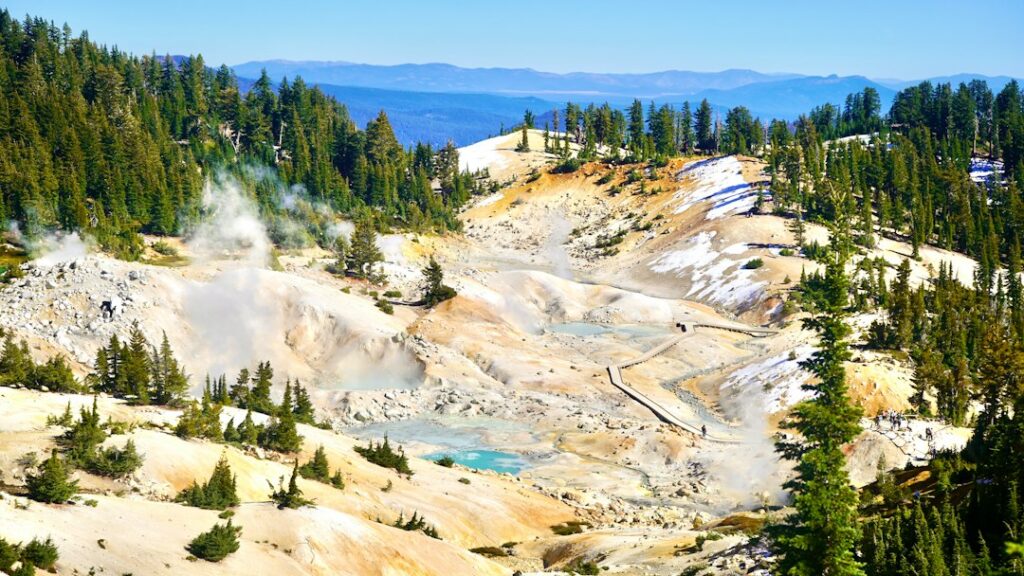
The park’s star attraction is Bumpass Hell, the largest hydrothermal area in the Cascades. The 3-mile round-trip trail descends through mountain hemlock forest to a basin of boiling mud pots, hissing fumaroles, and turquoise pools. The boardwalk keeps you safe from the scalding, acidic ground while offering close views of Big Boiler, a massive fumarole that vents steam at over 300 degrees.
For more geothermal features with fewer people, hike to Devil’s Kitchen from Warner Valley. This 4.2-mile round-trip trail follows Hot Springs Creek through meadows before reaching a smaller but equally active thermal area. The smell of sulfur signals you’re close.
Sulphur Works, right off Highway 89 near the southwest entrance, requires no hiking at all. Pull over and walk the short boardwalk through steaming vents and mud pots—perfect for families or those short on time.
Lakes, Peaks, and Alpine Trails
Lassen Peak Trail is the park’s signature hike. The 5-mile round-trip gains 2,000 feet in elevation, switchbacking up the volcano’s southern flank to panoramic views of Mount Shasta, the Sacramento Valley, and the surrounding wilderness. Start early to avoid afternoon thunderstorms, and bring layers—it’s often windy and cool at the summit even in summer.
For a gentler experience, head to Manzanita Lake near the northwest entrance. The 1.6-mile loop circles the lake with reflections of Lassen Peak on calm mornings. Rent a kayak or canoe at the Manzanita Lake Camper Store and paddle out for an even better perspective.
Kings Creek Falls drops 50 feet through a rocky gorge, accessible via a 2.3-mile round-trip trail that descends through meadows bursting with wildflowers in July. The return climb is steep, but the waterfall and creek crossings make it worthwhile.
Wildlife and Wildflowers
Black bears roam throughout the park, especially in berry season. Store food properly and make noise on trails. You’ll likely spot ground squirrels, chipmunks, and Steller’s jays near picnic areas. Mule deer graze in meadows at dawn and dusk.
Birdwatchers should look for mountain bluebirds, Clark’s nutcrackers, and American dippers along creeks. In alpine areas above treeline, watch for pikas—small, round-eared mammals that live among the rocks and let out high-pitched calls.
July brings peak wildflower season to the subalpine meadows. Lupine, paintbrush, and penstemon blanket the trails around Kings Creek, while the area around Bumpass Hell blooms with alpine shooting stars and mountain heather.
Where to Stay and Practical Tips
The park has eight campgrounds, with Manzanita Lake and Summit Lake being the most accessible and well-equipped. Reservations open in April and fill quickly for summer weekends. For those preferring a roof overhead, the towns of Chester (30 minutes from the southwest entrance) and Shingletown (45 minutes from the northwest entrance) offer motels and vacation rentals.
Mineral, just outside the southwest entrance, has a general store and café. Stock up on supplies in Redding or Red Bluff before arriving—services near the park are limited.
Cell service is spotty to nonexistent throughout the park. Download maps and trail information before you arrive. The Kohm Yah-mah-nee Visitor Center at the southwest entrance offers exhibits, a café, and updated trail conditions.
Winter transforms Lassen into a snow-covered wilderness. The park plows the road to the visitor center, where you can access snowshoe trails and warming huts. Rangers lead free snowshoe walks on winter weekends.
Ready to explore more of California’s diverse landscapes? Subscribe to the Love California newsletter for one short story a day about the Golden State’s best destinations, trails, and experiences.
Tours & experiences in California


Powered by Viator. Some links are affiliate links — we may earn a small commission at no extra cost to you.