
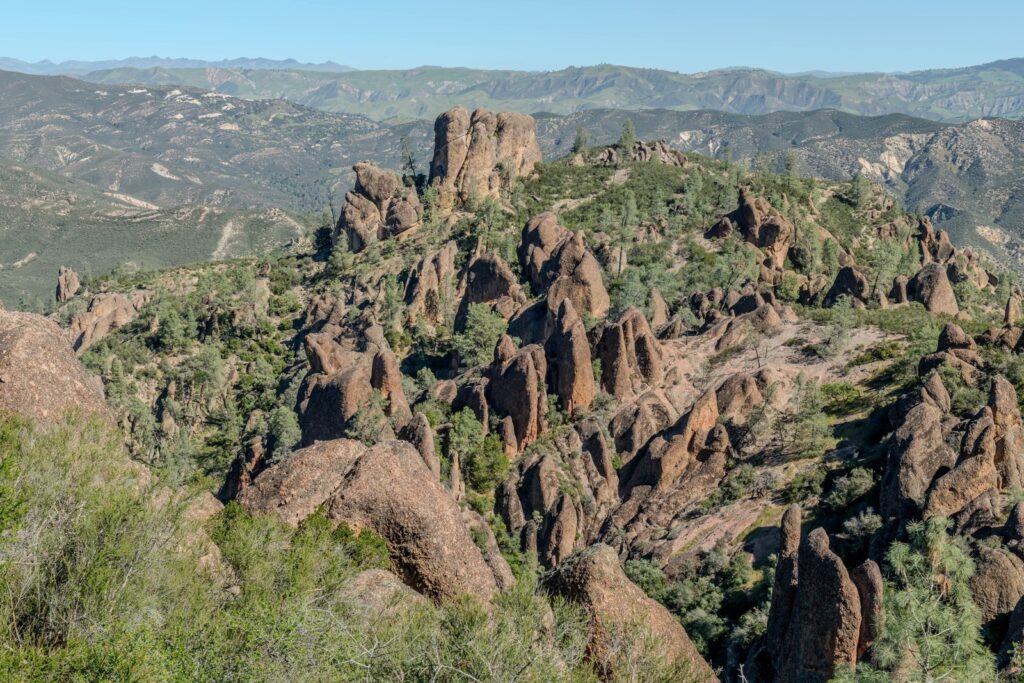
Pinnacles National Park doesn’t get the attention of Yosemite or Joshua Tree, but that’s part of its appeal. Located in the Gabilan Mountains east of Salinas, this 26,000-acre park protects the eroded remnants of an ancient volcano, creating a landscape of dramatic rock formations, cave systems, and some of the best rock climbing in California.
The park is also one of the last refuges of the California condor. On any given day, you might spot these massive birds soaring overhead—one of the great conservation success stories of our time.
Two Entrances, No Through Road
Pinnacles has east and west entrances, but no road connects them. The east entrance, accessed via Highway 25 from Hollister, leads to the Bear Gulch area and the park’s only campground. The west entrance, reached from Soledad on Highway 101, provides access to the Chaparral Ranger Station and several trailheads.
Most visitors enter from the east side. The road is better maintained, facilities are more extensive, and you’ll find the visitor center, campground, and easier access to the park’s two main cave systems. Plan on about two hours from San Jose, slightly less from Monterey.
Spring and fall offer the best conditions. March through May brings wildflowers and moderate temperatures. Summer temperatures regularly exceed 100 degrees—the park essentially shuts down midday. Winter can be pleasant for hiking, though some trails may be muddy after rain.
The Talus Caves
Pinnacles features two talus cave systems—Bear Gulch and Balconies—formed when massive boulders wedged in narrow canyons, creating cool, dark passageways. Unlike limestone caves, these have no stalactites or stalagmites, but they’re still remarkable to explore.
Bear Gulch Cave is typically open from mid-July through mid-May, closed during bat maternity season when Townsend’s big-eared bats raise their young. The cave section adds only about 0.3 miles to the Moses Spring-Rim Trail loop, but you’ll need a flashlight or headlamp. Some sections require scrambling over boulders.
Balconies Cave, on the west side, stays open year-round except after heavy rain. The Balconies Cave Trail is a 2.4-mile loop that takes you through the cave system and back along the cliff face. It’s less crowded than Bear Gulch and equally impressive.
Hiking and Climbing
The High Peaks Trail is the park’s signature hike. The 5.3-mile loop from Bear Gulch climbs steeply through the rock formations, with sections of narrow footholds cut into granite and metal railings bolted to cliff faces. It’s not for anyone uncomfortable with heights, but the views across the Salinas Valley are worth the effort. Start early—there’s minimal shade.
For an easier option, the Moses Spring-Rim Trail is a 2.2-mile loop that passes through Bear Gulch Cave and offers good condor-watching opportunities without the extreme elevation gain.
Rock climbers come for the volcanic breccia—a conglomerate rock that offers unique holds and challenges. The park has over 400 routes, from beginner to expert. Climbing is prohibited on certain formations to protect nesting raptors, particularly from January through July.
Condors and Wildlife
California condors were reintroduced to Pinnacles in 2003. The population now numbers around 80 birds, making this one of the best places in the state to see them. Look for their nine-foot wingspan and the distinctive white triangles under their wings.
The best viewing is often from the High Peaks or along the Condor Gulch Trail. Rangers at the visitor center can tell you about recent sightings. Early morning and late afternoon are prime times.
You’ll also encounter deer, wild pigs, bobcats, and a variety of raptors. Prairie falcons nest in the rock spires. In spring, listen for the canyon wren’s descending trill echoing off the rocks.
Practical Information
The entrance fee is $30 per vehicle, valid for seven days. The Pinnacles Campground on the east side offers tent and RV sites, plus a pool that’s welcome after a hot day on the trails. Reservations are essential from March through May.
There are no food services in the park. Bring everything you need, including plenty of water—figure at least two liters per person for any substantial hike. The nearest towns are Hollister to the north and Soledad to the west, both about 30 minutes from their respective entrances.
Cell service is spotty to nonexistent. Download trail maps before you arrive. The park’s app includes offline maps and up-to-date information on cave closures and condor sightings.
Pinnacles rewards the effort it takes to get here. You won’t fight crowds for parking or wait in line for trailheads. You’ll just find dramatic geology, rare wildlife, and the kind of solitude that’s increasingly hard to come by in California’s better-known parks.
Want more California travel stories delivered daily? Subscribe to the Love California newsletter—one short story a day about the Golden State’s best places, from coast to mountains to desert.
Tours & experiences in California


Powered by Viator. Some links are affiliate links — we may earn a small commission at no extra cost to you.